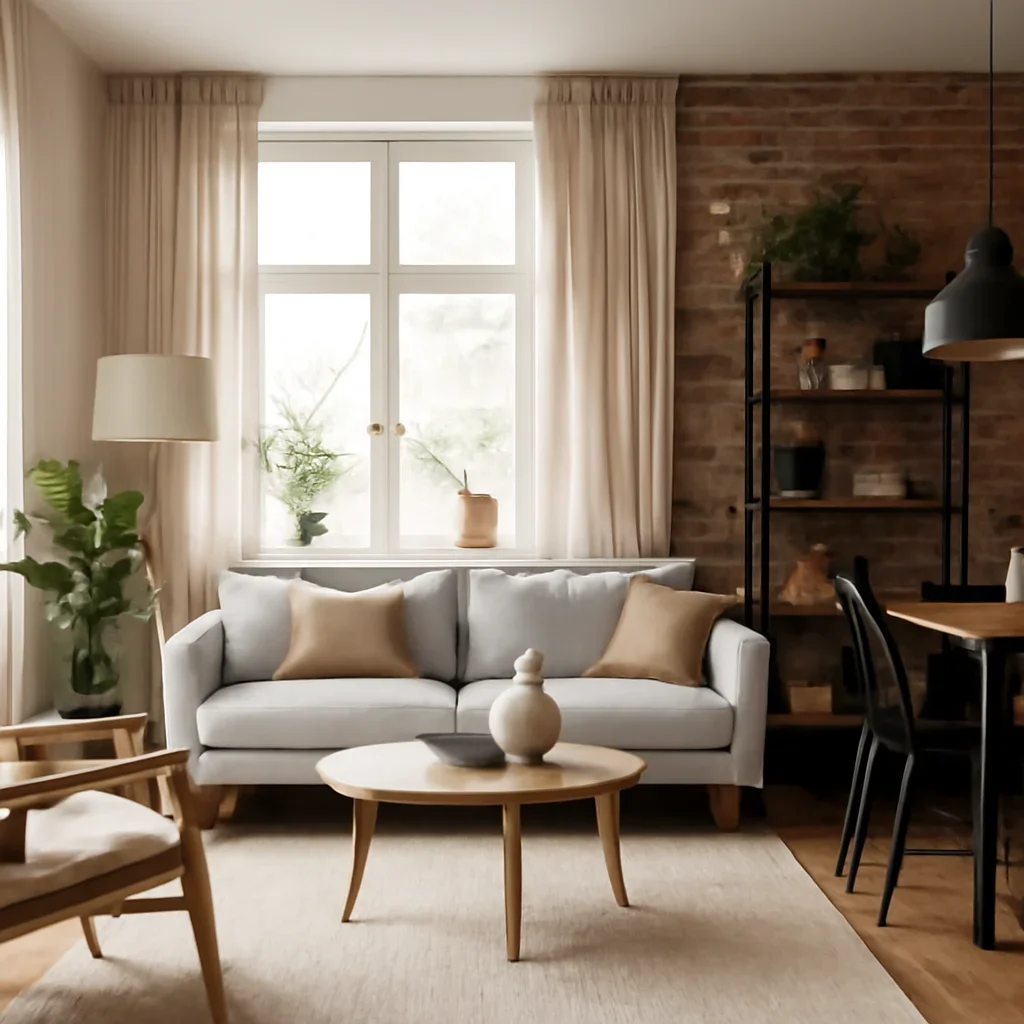
Compare the material language
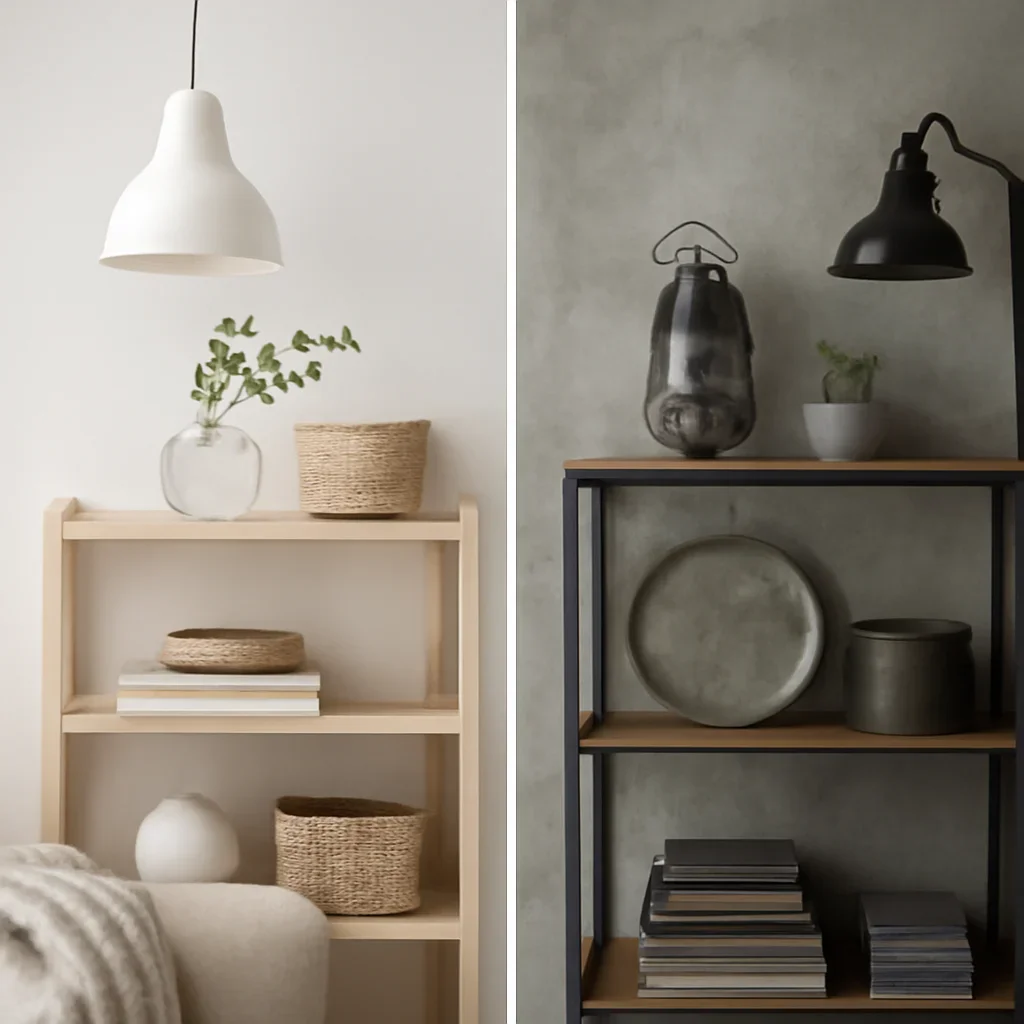
Scandinavian rooms favor pale woods, gentle contrast, and tactile softness, while industrial rooms often use darker metals, rougher finishes, and more visible structure.
Scandinavian and industrial interiors can both feel modern, but they arrive there in very different ways. One leans light, soft, and restrained. The other often feels darker, sharper, and more structural.
Comparison pages help you see where two design directions genuinely diverge. We look past trend labels and focus on how layout, materials, mood, and everyday use change from one option to another.
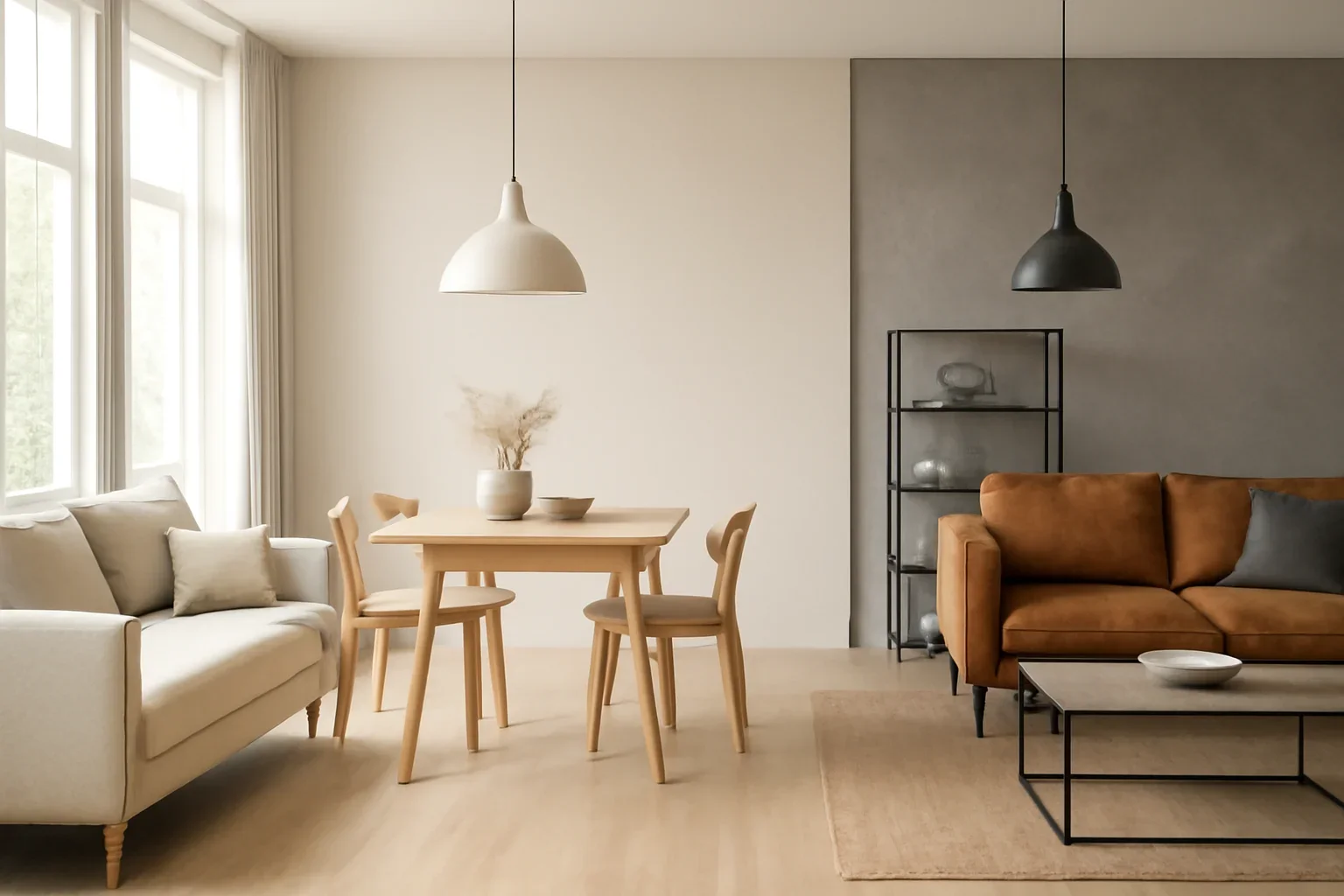
These are the design moves that usually matter most once you move past the first impression of the room.
Scandinavian rooms favor pale woods, gentle contrast, and tactile softness, while industrial rooms often use darker metals, rougher finishes, and more visible structure.
Scandinavian interiors tend to feel airy and calm. Industrial interiors often feel moodier, bolder, and more anchored.
Bright rooms can handle either approach, but the best fit usually depends on how much contrast and intensity you actually want to live with.
Scandinavian and industrial interiors can both feel modern, but they arrive there in very different ways. One leans light, soft, and restrained. The other often feels darker, sharper, and more structural.
Comparisons become more useful when you test each option against the light, scale, and habits of the actual room instead of an abstract ideal.
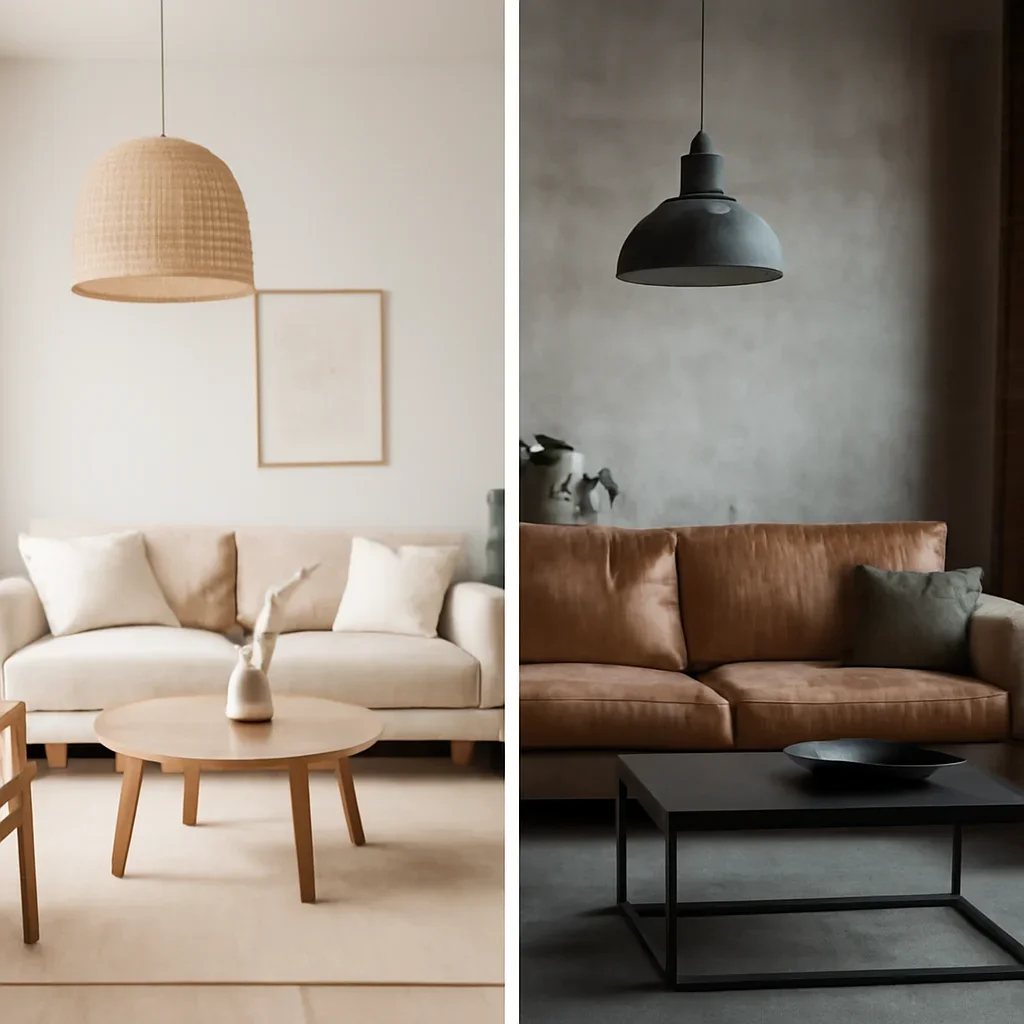
Scandinavian rooms favor pale woods, gentle contrast, and tactile softness, while industrial rooms often use darker metals, rougher finishes, and more visible structure.
Comparisons become more useful when you test each option against the light, scale, and habits of the actual room instead of an abstract ideal.
Scandinavian interiors tend to feel airy and calm. Industrial interiors often feel moodier, bolder, and more anchored.
Comparisons become more useful when you test each option against the light, scale, and habits of the actual room instead of an abstract ideal.
A simpler planning framework keeps attractive ideas from turning into cluttered decisions.
Clear answers help readers move forward faster and avoid decisions that only look good on the surface.
Yes. A lighter Scandinavian base with a few industrial accents is often the easiest balance to live with.
Scandinavian styling often feels easier in compact rooms because the palette and forms stay visually lighter.
Move into nearby room ideas, deeper articles, or planning resources without losing the thread of the topic you started with.
Editorial comparisons of styles, layouts, and design choices
Comparison of workplace layout models
Editorial archive and latest design articles
Browse all site topics by room, style, and project type
Browse the connected pages, save the strongest details, and use the newsletter when you want a more curated flow of ideas from Modern Design Life.
Newsletter
Categories